Marking 9 Years of Helping Clients Achieve Their Growth Goals


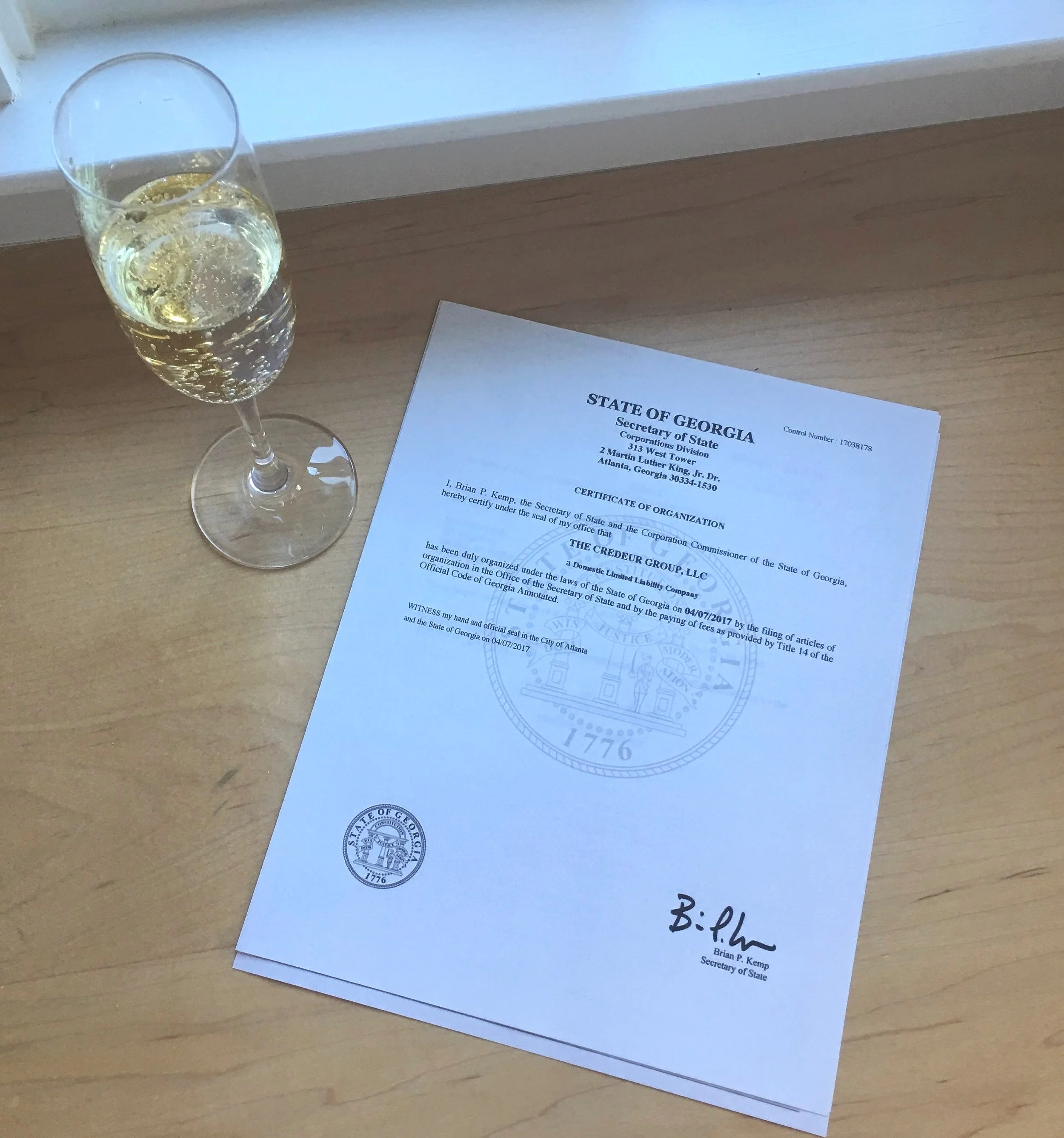
Nine years ago, I founded The Credeur Group to help clients large and small achieve their growth goals — and it’s been the most rewarding chapter of my career, hands down. My favorite is when a client is wrestling with a challenge or opportunity or major business decision, and calls to talk it through with a trusted consigliere. Or when they need to distill complex ideas into a concise and effective executive speed read, white paper, or lead generation piece. Or when they need helping creating an investor pitch deck with a compelling story to raise capital that will transform their business.

Since starting The Credeur Group, we have worked with clients on those things — and so much more. We have helped clients:

  • Triple and quadruple in size

  • Raise hundreds of millions of dollars in capital, grow revenue and sell to a Fortune 50 company

  • Secure new rounds of equity and debt capital

  • Promote transactions worth billions of dollars

  • Win major national, regional, and local awards

  • Earn coverage in The New York Times, The Wall Street Journal, The Financial Times, Bloomberg, The Associated Press, Reuters, Atlanta Journal Constitution, Atlanta Business Chronicle, Crain’s outlets, Business Journals, and other publications

  • Create and publish branded journalism and other content with partners/vendors

  • Launch new products, secure patents and trademarks, and enter new global markets

  • Create and publish Annual Reports and Corporate Responsibility Reports

  • Write CEO testimony for U.S. Congressional hearings

  • Write executive speed reads, white papers, and lead generation pieces for C-suite audiences

  • Promote the securement of the largest pre-litigation settlement in Georgia history, earning global news coverage

I enjoy working with Sherwin Loudermilk and the team at Loudermilk Homes, David Ludd and the team at brrr°, Will Bence and the team at Wingspire Capital, NSM Construction, Michael Palmer of Schill Grounds Management, Andrew Lampros and Chris Hall of Hall & Lampros, Nina Tickaradze and Brandi Bendall Bullard of Hall Booth Smith, Juli Gotto of Simmons Perrine, and many other smart, capable, terrific professionals who are a joy to work with.

I owe a debt of gratitude to mentors including Sabo PR Founder Mary Ann Sabo, Jaime Luckey of Luckey Communications, Amy Zehfuss of Springboard Strategy, Adam Levy of 30 Point, Jason Kelly of Bloomberg News, LeAnn Boucher, Jennifer Kane Kelly of J. Kelly Incorporated, Erica Stephens of Nana Grants, Chad Swanson of Burge & Associates and many more who have been and continue to be generous with wisdom and encouragement.

As The Credeur Group begins its 10th year, I’m excited to continue learning effective ways to help clients achieve their goals, stand out in a crowded marketplace, and grow their businesses.

Incorporating new tools, like the best way to use AI to augment and enhance our work and the flexibility that DIY graphic design services like Canva bring to the table, keeps us sharp while also helping us become more productive.

We’re also gaining sophistication with SEO, Google Ads, and social media tools to track and measure impact and ROI.

We’re helping clients navigate the challenges and opportunities they encounter each day, and focus on high-payback activities and wise decisions that will take their business to the next level.

Is Your Business Prepared to Weather a Polycrisis?


We are in an era of multiple crises that can happen simultaneously, creating a flashpoint that can send shockwaves across an enterprise.

What began as a cyberattack or data breach can quickly cripple operations, lock up computers and data, disrupt or take down the ability for employees to communicate and react, interrupt revenue streams, flood customer support call centers, damage reputation and hurt brand trust, and expose the business to legal risks and liability.

Conditions and tangled vulnerabilities that have been incubating for years are suddenly exposed, and the damage multiplies.

While the final trigger may be a fast-moving event (the breach), it reveals the slower moving stressors that have been building for years — teams working in silos, success that masked danger, resource decisions in one domain that affected others, multiple systems or functions that were weakened but nobody realized it. No single person sees the full picture.

Executives and senior leaders who are prepared to navigate and manage through a polycrisis are more likely to proactively spot and manage vulnerabilities that are interconnected, according to a growing body of research by the Center for Creative Leadership.

These three things can mean the difference between a quickly recoverable event and a catastrophe that materially threatens your business:

  1. Identify and address stresses before the trigger — Audit your organizational readiness for polycrisis. Identify where and how core functions and operations are interconnected. Have good backup systems, and a way to roll back to operations to a state from before the crisis occurred. Document manual or offline procedures. Invest in leadership development as a force multiplier. Develop good relationships with external partners, so they can play a role in your recovery.

  2. Act systemically, not sequentially — Don’t try to fix problems one at a time; fix the entire system. Know where your interconnected nodes are, and have circuit breakers and firebreaks. For a cyber event, that may mean shutting down everything to limit the attack.

  3. Empower leadership to operated collectively — No single executive should command the response. Teams with real authority and decision-making powers should collaborate across boundaries simultaneously, and have experience and comfort doing so.

Lastly, it’s important to take advantage of the unique transformation window of opportunity for positive change that occurs when polycrisis strikes. The organization is primed for rapid change, innovative ideas, and new ways to thinking as systemwide barriers dissolve. That elasticity won’t last long, and you can miss out on those gains if you don’t document the wins and adopt changes that helped the enterprise mitigate disaster.


Celebrating 8 Years for The Credeur Group!


Eight years ago, I scratched an entrepreneurial itch and founded The Credeur Group with a modest idea of leveraging my financial knowledge and writing experience from Bloomberg News and Atlanta Business Chronicle to help a few clients achieve their own growth goals.

Some of our clients have doubled or tripled in size since then.

We helped them win prestigious and competitive awards at the national, regional, and local levels.

We wrote major corporate reports, ESG and Corporate Responsibility reports, Annual Reports, congressional testimony, speeches, sponsored content, SEO content, Google Ads, social media content, press releases, and so much more.

We created investor pitch decks, business plans, board reports, investor updates, and communications plans around mergers, acquisitions, divestitures, spinoffs, management buyouts, bankruptcy filings, and court-supervised exits from bankruptcy. We helped explain the need for recapitalization plans or additional rounds of venture funding.

We provided counsel on how to best respond to media and other stakeholder inquiries on pending bankruptcy filings, executive changes, mergers and acquisitions, and complex business and operational matters.

We worked alongside senior leadership teams to help them make the wisest and best decisions on how to handle difficult situations, and how to communicate their goals and their thinking to employees, investors, customers, and other stakeholders.

We asked smart, thoughtful questions to help our clients clarify their own thinking or untangle their thoughts so they could gain conviction about the best path forward. We interviewed their job candidates for key roles to ask insightful questions and discover whether that candidate was the best fit for the job.

We helped our clients earn media coverage in international and national publications such as The Daily Mail (U.K.), The New York Times, The Wall Street Journal, The Financial Times and The Washington Post.

We also helped them get local media coverage in newspapers read by local customers or constituents such as The Atlanta Journal-Constitution, The Marietta Daily Journal, The LaGrange Daily News, and influential lifestyle magazines such as Southern Living and Modern Luxury.

Thank you to all of our clients and dear friends and mentors who shared your wisdom and encouragement over the years, including Mary Ann Sabo of Sabo PR, Adam Levy of 30 Point, Jason Kelly of Bloomberg News, LeAnn Boucher of Cox Enterprises, Jaime Luckey of Luckey Communications, Jennifer Kane Kelly of J. Kelly Incorporated, Erica Stephens of Nana Grants, Amy Zehfuss of Springboard Strategy, Chad Swanson of Burge & Associates — and so many more!

Knowing When to Exit a Toxic Environment


A toxic workplace culture can occur quickly, especially during major projects that intensify stress or during periods of change such as a companywide reorganization or layoffs.

Sometimes you can’t put your finger on what’s going sideways until you’re already deep into toxic territory.

Perhaps what started out as typical corporate alpha behavior — dominating a meeting, talking over others, cutting people off — snowballs into outright bullying, pushing around, and disrespectful tone.

What’s worse, the person doing the bullying often singles out one or two people for their wrath and micromanagement. That can bring an entire team or a project to a grinding halt and create new hurdles, roadblocks, and bottlenecks that are wholly unnecessary and making things worse and harder for the entire team.

Fear of angering the aggressor or a desire to avoid their lashing out often prompts people to stop asking questions, seeking clarity, speaking up about knowledge they have, or flagging mistakes they see.

Trust is shattered. Institutional knowledge is lost. An already difficult situation becomes even harder than it needs to be.

People begin to cower, and whisper amongst each other about the divisions in the team and the awful culture. Eventually, people will decide they’ve had enough and will start to leave.

Workplace culture expert Annie McKee wrote an article called “Keep Your Company’s Toxic Culture from Infecting Your Team” for the Harvard Business Review, and she identifies a few red flags that indicate your team’s or company’s culture is becoming toxic:

  1. Pressure to cover — People start to feel like they have to hide, downplay, or not speak up about their knowledge, questions they have, or clarification or direction they need to complete their work successfully.

  2. Hyper-competitiveness — Teammates start to feel like they have to constantly one-up each other, or fight for approval or good graces.

  3. Pressure to overwork — Nothing is ever good enough and the more you give, the more is demanded of you. Unreasonable deadlines or massive amounts of work are doled out, and expectations for completing the work are unrealistic. This can often include demands to work late at night and on weekends, violating the work/life balance.

When it becomes clear that this is not just a one-off phenomenon and is becoming a permanent toxic culture, McKee says it’s important to self-reflect on how much you’re willing to put up with. Take a personal inventory and be real with yourself about how you may have contributed to the toxic culture, and make changes if and where you can.

If your team or company has an underlying healthy culture, any issue that led it into toxic territory can be easily remedied with mature, open, and honest conversations about what happened and how to fix it. However, she acknowledges: Let’s face it: you’re probably not going to be able to single-handedly change the culture of your entire organization.

McKee shares a few tips for coping in a toxic workplace:

  1. Start with yourself — As every flight attendant is trained to do, prioritize taking care of yourself and your own professional, mental, and emotional well being by putting on your own oxygen mask first before helping others. This may mean establishing healthier boundaries with colleagues who act immature, unprofessional, and bullying in meetings by asking (politely) if you can finish speaking when they cut you off, or (respectfully) acknowledging when harsh tone is directed at you.

  2. Repair relationships — Try to address conflict directly with the person or people you feel it with most acutely. Seek to have a private one-on-one conversation to clear the air, acknowledge your own role or shortcomings, and move forward with mutual respect.

  3. Form a coalition — Try to get broad agreement and buy-in on creating positive changes so you can continue to have a more positive culture going forward.

In some cases, the toxicity is too great and the damage is too deep to overcome. It’s unfortunate, but it happens.

Continuing to work in an environment that accepts toxic and bullying behavior is emotionally draining and unprofessional.

Sometimes the best thing is to part ways and exit as gracefully as you can.

Prototype, Test, Fail & Iterate

 
IMG_7374.jpeg
 

Too often, business leaders agonize about major decisions. It becomes daunting. You don’t know where or how to begin. What if you get it wrong? Analysis paralysis sets in.

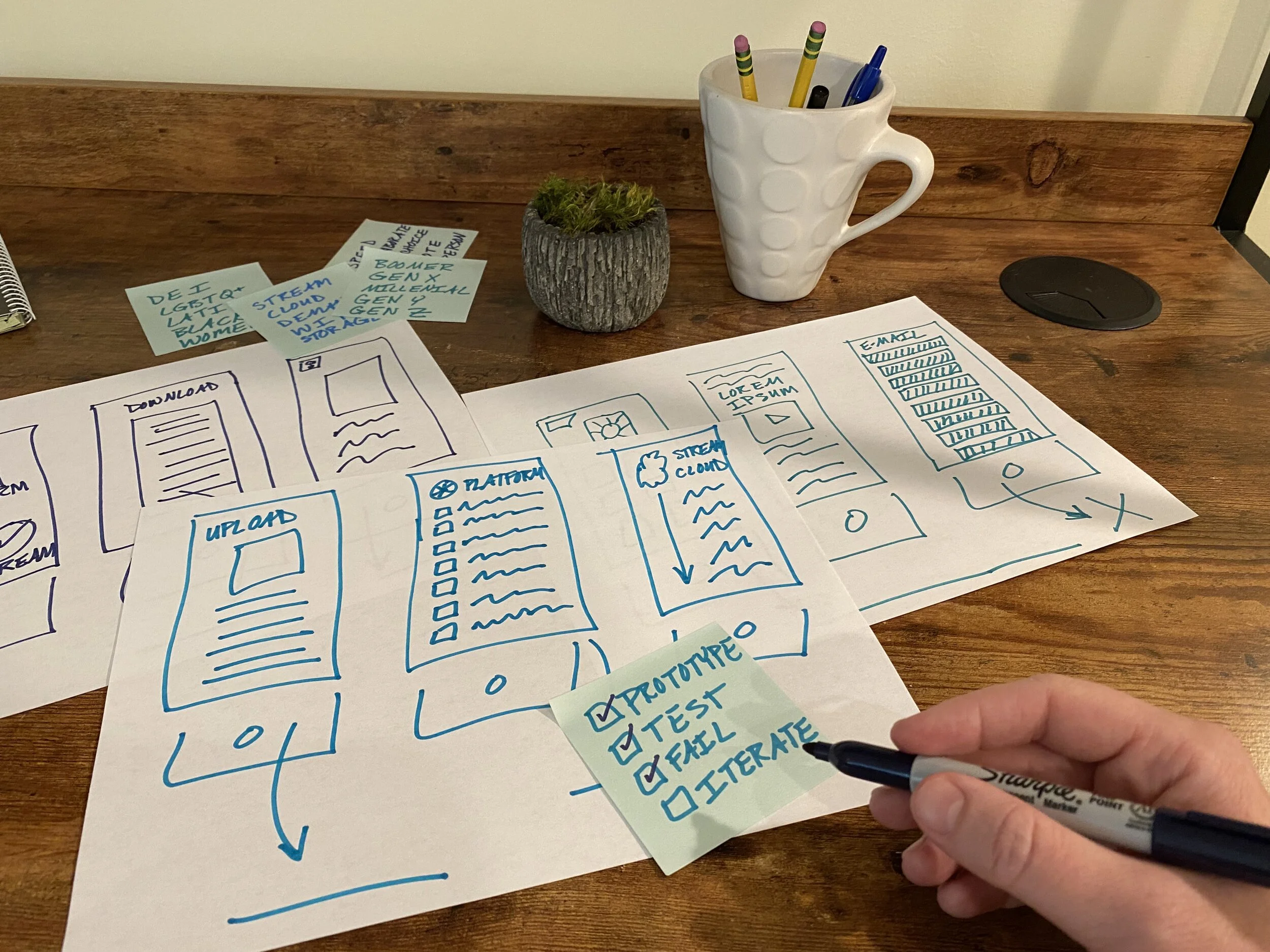
To make better decisions with confidence and conviction, take a cue from the concepts of design thinking: prototype, test, fail & iterate.

Start with a hypothesis or idea, and build a simple prototype that’s quick and dirty. That might mean a hand-drawn mockup of a new website page or logo, or a paper cutout of a product.

Let that early prototype shape your thinking so you can conduct an early test of your idea. That could be a user survey embedded in your next digital newsletter, or a coupon code for a discount to entice new users to buy your product.

Sit back and study the early results. What worked? What didn’t? How could you improve and make it better?

I recently worked with a team of IT developers who were creating a new app, and they have loads of expertise in writing code and creating new functions but they don’t have much experience in the business world of companies they were building the app for — field service businesses, construction companies, HVAC and plumbing/electrical companies, real estate and property managers.

As the development team walked me through an early beta version of the app in a safe sandbox environment, we talked through use cases and lots of “what if I wanted to…” scenarios. They took that feedback and went back to the drawing board to overhaul the functionality and rethink how they approach the architecture and coding.

The new beta version was vastly superior, and has better functionality that will broaden its appeal for other potential users. After testing it some more in the sandbox, they’re doing additional iterations to make the user interface more friendly.

Applying design thinking to their hybrid waterfall/agile approach to development is pushing them to think more like an end user as they find better ways to build an excellent product.

The Year Everything Changed


Many of us are still struggling to process and react to all the changes 2020 has wrought.

The ongoing coronavirus pandemic and extended shutdown or pivot to remote work for millions of businesses.

Overseeing remote school while also trying to focus on our own jobs.

Ongoing disruptions of everyday life as grocery stores still run out of toilet paper, our favorite restaurants go under and vacation plans get scuttled.

Social distancing and isolation from the family, friends and other loved ones whose support we need now more than ever before.

Protests for social justice that turned violent and scared some of the very people they were meant to support.

A painfully divisive election that led to heated exchanges and hurtful words for many people on both sides of political spectrum.

2020 will be remembered as year of massive change for many of us, and the enduring effects of some of those changes won’t be fully understood for a long time to come.

Many of us also experienced moments of joy and hope amid the hardship. A new job. A new baby. A kid who learned to ride a bike. Finishing college. Winning an election. Learning a new skill or hobby. Making time to read a book or just sit and breathe.

These moments of light are so important, and help us cope through the darker times.

They may also open our eyes to old habits, behaviors and relationships that no longer serve us, and we may realize that now is a good time to make positive change.

As 2020 comes to an end, it’s a good time to take stock and rethink what you want out of life. The answer may surprise you.

Want to Reach Peak Performance? Pause and Rest.


Endurance athletes can attest to that time earlier in their career when they trained long and hard, but repeatedly fell short of goals.

Eventually they found an unlikely answer: they needed to rest and let their bodies recover. 

The same is true at work.

Time away from work makes us sharper, more insightful, more innovative and creative as we try to solve complex problems. Pound away day and night for too long, and you lose that mental edge. Your thinking gets soft. You start to autopilot.

So give yourself permission to take a break.

When there's nothing urgent happening at work, take a few hours in the evening or on the weekend to NOT check your e-mail and social feeds. Establish an understanding among colleagues, and then trust that someone will call if something urgent happens or needs an immediate response.

Katya Andresen, SVP at Capital One and the former CEO of Cricket Media, recently noted in a blog post about the importance of pausing that even Kenyan distance runner Tegla Loroupe, who trained 120 miles per week (190 kilometers) and was the first African woman to win the New York City Marathon, took Sundays off.

There’s a great lesson in there. Here’s to hoping you can take some time off this holiday season to rest and refresh before we jump into 2019.

Why Leaders Should be the Last to Speak in Meetings


Nothing shuts down candid, insightful thoughts from your best employees than a boss who hijacks a meeting and spouts off his opinions and then asks: "What do you guys think?"

Good luck getting their honest opinions, especially if any of them happen to run counter to the vision the boss just laid out.

Mature leaders have mastered the skill of holding their thoughts until everyone else has had a chance to go first.

As people are talking, they ask questions to clarify and gain deeper insights as to why the person thinks that way, but they don't agree or disagree or show their hand.

Not only does this elicit richer and deeper insights, but it also enhances one's ability to make more informed decisions.


Snarky? Or Just Dashing Off a Short Note?

 
Snarky.png
 

Sometimes it stings a little when you read an email or text from a colleague and it's jarringly short and pointed.

Wrong tone. Redo.

Too long. Cut in half.

Pls rewrite, make more formal.

Is that snark? Or are they simply pressed for time and sending a to-the-point note? Usually the latter.

So much context around tone and meaning gets lost in email and text, and that can lead to misunderstandings or worse.

We should assume the best, especially when the note is from someone you generally have a great relationship with.

They may be dashing off a note in the few seconds before they walk into a meeting, or during a lull on another phone call.

Their attempt at brevity and directness is meant as a kindness to you so they seem responsive and respectful of giving you feedback that can keep a project on track.

If you notice tone creeping up more frequently, there may be an underlying issue that needs to be addressed.

When that's the case, pick up a phone or better yet -- meet in person, ideally over a meal.

It's hard to be hostile when you're spending an hour together breaking bread.